





I will praise you, Lord, among the nations; I will sing of you among the peoples. For great is your love, reaching to the heavens; your faithfulness reaches to the skies. Be exalted, O God, above the heavens; let your glory be over all the earth.
Psalm 57:9-11 NIV
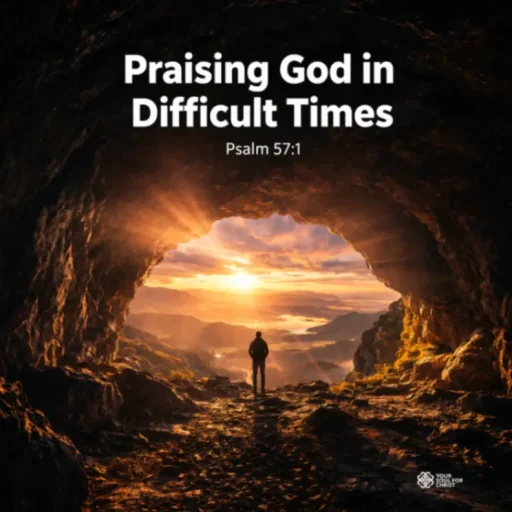
David spent years on the run from King Saul. He moved constantly from one place to another, leaving behind his home, his family, and any sense of security. It is precisely in those years of danger and displacement that we find some of his most remarkable words. Indeed, Psalm 57 records one such moment. David was hiding from Saul inside a cave. Yet he was still praising God in difficult times with a steady, unwavering heart.
His opening cry in Psalm 57:1 captures it perfectly: “Have mercy on me, my God, for in you I take refuge. I will take refuge in the shadow of your wings until the disaster has passed.”
From that cave, David does not spiral into fear or bitterness. Instead, verse 5 rings out: “Be exalted, O God, above the heavens; let your glory be over all the earth.” In verse 7, he adds: “My heart, O God, is steadfast, my heart is steadfast. I will sing and make music.” By verse 9, he declares: “I will praise you, Lord, among the nations; I will sing of you among the peoples.” And in verse 10, he concludes: “For great is your love, reaching to the heavens; your faithfulness reaches to the skies.”
Furthermore, these were not easy words to write. To avoid capture, David had even feigned madness before his enemies (1 Samuel 21:13). He had, indeed, left behind the comfort of his home and was endangering his life by hiding. Yet, even so, he did not lose sight of God’s greatness.
Many today face challenges far less severe than what David endured and yet have lost the capacity to praise. The difficulties of life have, moreover, silenced what should have been unshakeable worship. In short, the contrast with David is both stark and challenging.
What Made Praising God in Difficult Times Possible
However, the answer lies at the very opening of Psalm 57:1: “In you I take refuge.” David could praise God from a cave because he was in God — truly, personally in him. He placed his trust entirely in God, not in his circumstances. Being in God, therefore, was the very foundation that produced this kind of testimony.
Nobody can experience the greatness and goodness of God from outside of that relationship. To know his peace in a storm, you must first be in him. As Jesus teaches in John 15, abiding in him is not optional. It is the very condition for knowing his plan and purpose, and for experiencing his saving grace and mercy.
Psalm 57 is ultimately not just a record of David’s exceptional character. It is an invitation. The question it poses is this: are you in him? That connection — that place of refuge — is what makes praising God in difficult times real. It makes worship not just possible, but enduring.
Living It Out
Like David, you can praise God from wherever you are. The reason is not easy circumstances, but being rooted in him. Stay connected to your refuge. That is the foundation on which worship endures.